Protests took place in Tel Aviv, Jerusalem, Haifa, and Beersheba, as a survey found broad but uneven support among Jewish Israelis for Operation Roaring Lion.
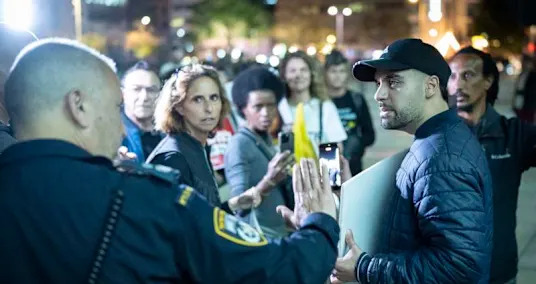
Israel Police arrested 21 anti-war protesters Saturday night as demonstrations against the conflict with Iran expanded in multiple cities despite restrictions on public gatherings.
Protests took place in Tel Aviv, Jerusalem, Haifa, and Beersheba, with hundreds of participants reported in Tel Aviv and Jerusalem and about 100 in Haifa, marking the largest turnout since weekly demonstrations began. Authorities said 13 people were arrested in Tel Aviv and eight in Haifa.
Police said the gatherings were not approved under Home Front Command regulations that ban events with more than 50 people. Officials said the increase in turnout followed calls by groups opposing the government to protest despite the restrictions.
“During a situation assessment that took place at the scene with a Home Front Command representative… it was clarified that there was a real risk to human life and accordingly, Yarkon [precinct] police commander Tzachi Sharabi ordered the gathering to be dispersed,” police said.
Hadash-Ta’al chairman Ayman Odeh, an Arab lawmaker involved in the protests, criticized the police response, calling officers fascists “in the service of the government” and saying they were afraid of “the heroic citizens who went out, despite everything, to make their voice heard.”

Survey shows broad, uneven support for war
The demonstrations come as a March 2026 survey by the Israel Democracy Institute found broad but uneven support among Jewish Israelis for Operation Roaring Lion. Support was strongest on the Right at 87% and about half on the Left.
The survey also found that Jewish and Arab respondents largely agreed that Iran’s resilience has been stronger than expected. Most Jewish respondents said Israeli society could sustain the campaign for up to one month, while 28% said as long as needed. Arab respondents were less optimistic about how long the public could endure the conflict.
A majority of Jewish respondents said Prime Minister Benjamin Netanyahu’s decision was driven by security considerations, while most Arab respondents viewed it as political.
LATEST POSTS
- 1
 France to build new nuclear aircraft carrier, Macron says
 - 2Firefighters rescue two Israelis trapped in vehicles on flooded roads in West Bank
- 35 Destinations Where Airfare Is Dropping The Most For Spring 2026, Per Dollar Flight Club Analysis
- 4Accor signs agreement to transform El Gouna resort as Sofitel
- 54 Famous Gaming PCs of 2024: Execution, Versatility, and Advancement





- New law puts familiar drinks, creams and gummies in legal limbo
- How Trump's marijuana executive order could change medical research landscape
- General Atlantic says ‘biggest mistake’ would be pulling back on Gulf deals
- Find the Insider facts of Compelling Systems administration: Building Associations for Progress
- Pick Your Number one sort of blossom
- At least 36 dead in major fire in Hong Kong residential blocks
- How to watch the 2025 Macy's Thanksgiving Day Parade for free
- Putting pig organs in people is OK in the US, but growing human organs in pigs is not – why is that?
- Explainer-Why are hepatitis B vaccines given to newborns?