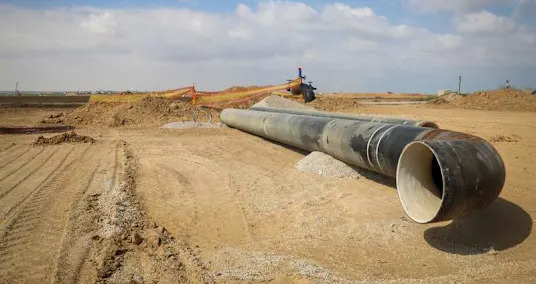
The post came in reply to a post from the United Nations Relief and Works Agency (UNRWA), saying that freshwater supplies in Gaza were "severely limited and polluted."
Gaza is receiving over 70,000 cubic meters of water per day, the Coordinator of Government Activities in the Territories (COGAT) claimed in an X/Twitter post on Sunday.
The post came in reply to a post from the United Nations Relief and Works Agency (UNRWA), saying that freshwater supplies in Gaza were "severely limited and polluted," due to a collapse in sewage infrastructure.
COGAT described UNRWA's claims as being "false narratives."
COGAT coordinates Gaza water line repair
"The facts speak for themselves," COGAT said. "When a water line issue was reported last week, we coordinated a rapid repair to restore full functionality immediately."
COGAT also said that there were four active pipelines leading into Gaza: Nahal Oz, Bani Suheila, Birkat Sa'id, and the Emirati line.
"While local groundwater faces challenges, we continue to repair infrastructure, even during combat, to ensure civilians access to safe, potable water," COGAT claimed.
LATEST POSTS
- 1
 Flu season is just beginning, but doctors are already on high alert
 - 2New law puts familiar drinks, creams and gummies in legal limbo
- 3The most effective method to Boost Eco-friendliness in Your Volvo XC40
- 4Volkswagen Plant Could Pivot From Building Cars to Supporting Iron Dome Systems
- 55 Great High-Mileage Electric Vehicles Of 2024



- Family Holiday spots
- The most effective method to Arrange a Higher Medical caretaker Pay During Your Next New employee screening
- Merz: 80% of Syrians in Germany expected to return within three years
- Does physics say that free will doesn't exist?
- Picking Your Next SUV: 4 Brands Offering Execution, Solace, and Wellbeing
- Find the Insider facts of Compelling Systems administration: Building Associations for Progress
- The Electric Toyota Hilux Is Finally here, But It's Not Cheap
- Artemis II astronauts arrive at Florida launch site for first moon trip in 53 years
- South Korea president says Iran war shows the need to ditch ‘extremely risky’ fossil fuels